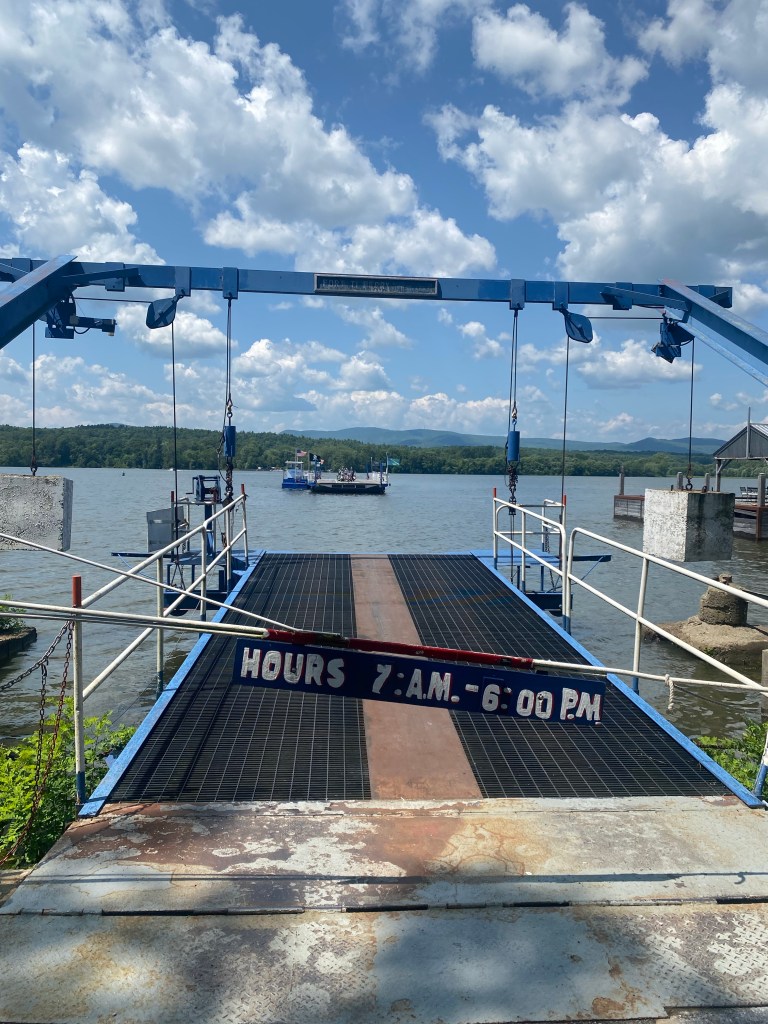
Today was not a biking day, but I did a lot of walking after my innkeeper Andrew was kind enough to give me a ride to the ferry to Ticonderoga.
Before my trip to Ticonderoga, however, I attended the First Congregational Church in Shoreham, VT, a few blocks from the inn. You may recall that the church I attended a week ago in Haverhill, NH, only had ten people in the congregation. This morning’s congregation consisted of only six folks plus me, all my vintage or older. I had coffee with them afterward in the church basement. They were all mostly retired, other than a woman who sells her quilts at craft shows every Saturday. One guy used to work for the power company before he retired. When he was still working there, during Hurricane Irma, he was electrocuted by a downed power line while he was standing on wet ground. The electricity entered through his hand and came out through his foot, and the strong current stopped his heart. Fortunately, his heart was restarted with another electrical shock administered with an AED (a defibrillator). In his words, “those things work.”
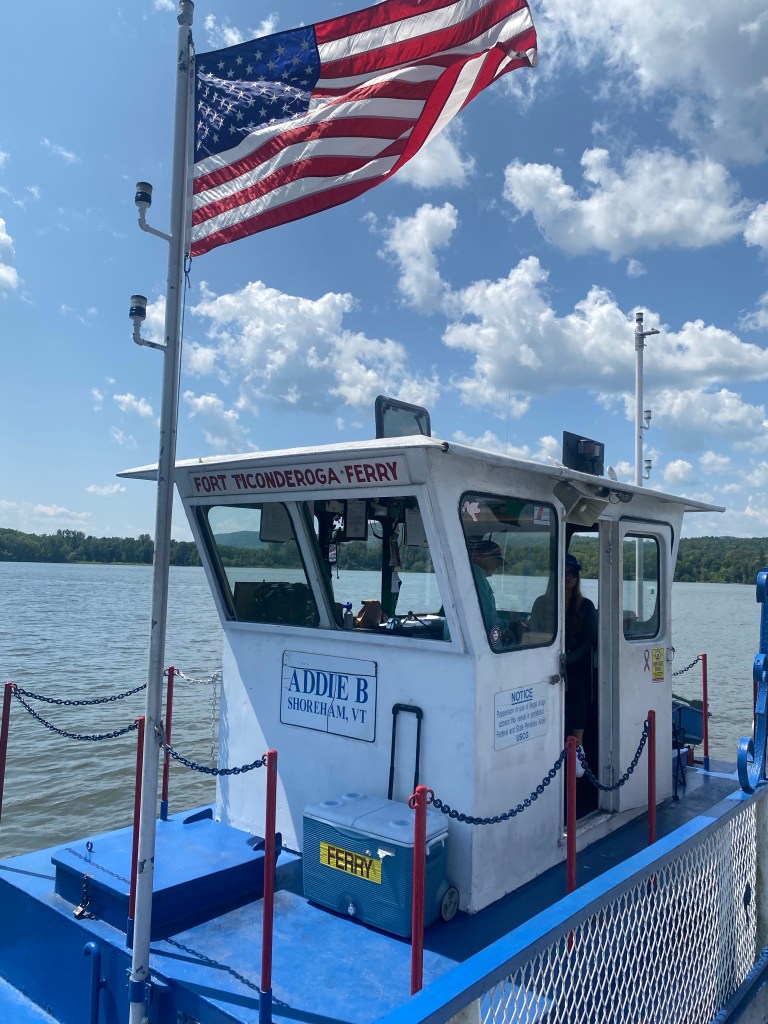
The ferry I took across Lake Champlain was established in 1759 by Lord Jeffery Amherst to connect the forts on Lake Champlain with those on the Connecticut River. My destination was Fort Ticonderoga, which was about a mile walk from the ferry landing.
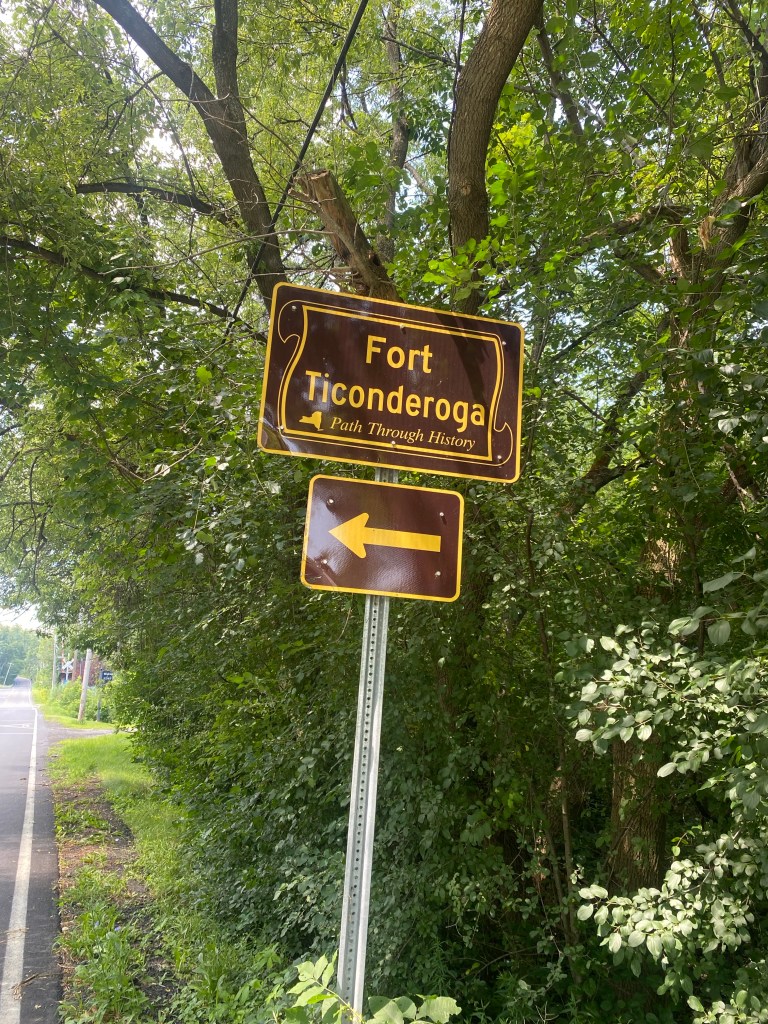
Fort Ticonderoga was originally built by France in 1755 and was named Fort Carillon. The fort was overtaken by British troops under Lord Amherst in 1759 and renamed Ticonderoga. During the American Revolution, the Green Mountain Boys and other militia under the command of Ethan Allen and Benedict Arnold captured the fort from the British in a surprise attack in 1775, and took its cannons to Boston, where they were used to help defend the city in a siege by Britain. Two years later, the British army under General Burgoyne recaptured the fort, and the British forces were also able to repel a subsequent attempt to retake the fort later that year led by John Brown. The British abandoned the fort later in the war and it ceased to be of any military value.
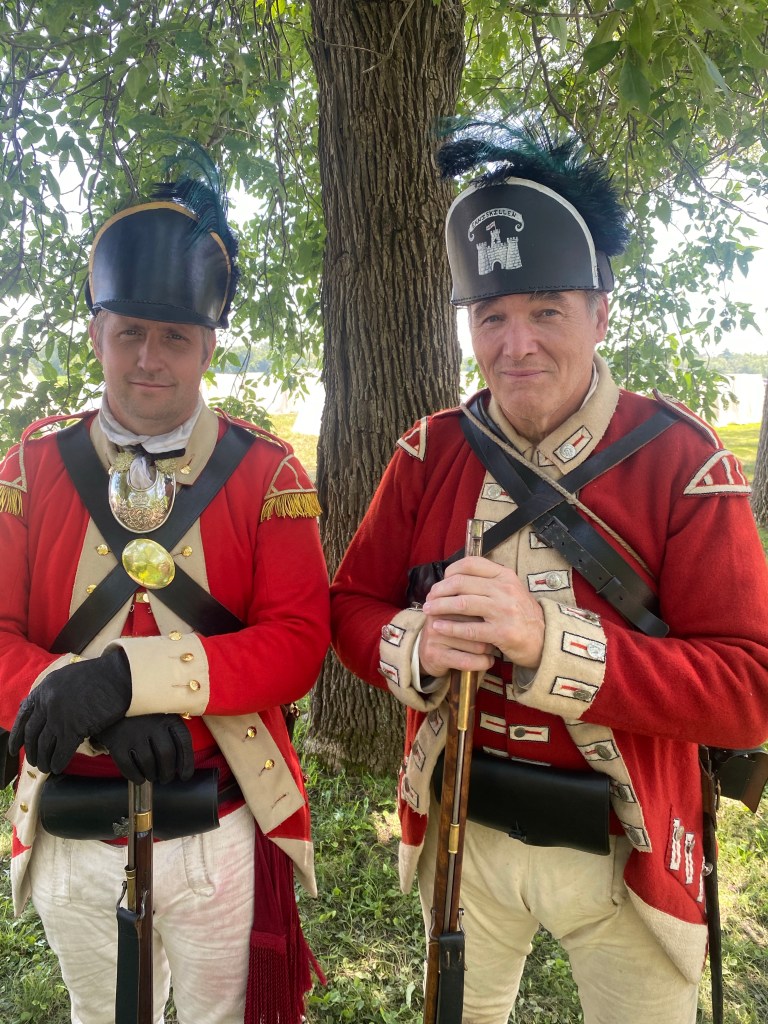
Today, there was a reenactment of Britain’s successful retaking of the fort in 1777. I estimate there were over 100 costumed volunteers participating. I had a chance to visit with Izzy and Todd, two British soldiers, before the action began. I told them I knew the British were going to win this thing, but that I thought King George was a doofus. They agreed with me. I asked how often they do this, and they said that if someone had the time and interest, they could do a reenactment like this every weekend. Todd said he has done a lot of “F&I” (French & Indian War) and “Rev War” work, and also some World War I reenactments, but doesn’t do as much as he has in the past.
I asked whether doing these reenactments helps them understand better what the soldiers were going through, and Izzy told me that absolutely they do. He said, however, that he still gets to sleep in his own bed at night and knows that no matter how realistic they are with the reenactments, they come nowhere near the real experience of having been in one of these battles.
In one of the displays at the fort, I was reminded of the challenges that soldiers of that era faced from disease. It is estimated that 1% of the soldiers in the 18th century died in battle, and 30% from diseases like smallpox, typhus, and dysentery. Here are some of the scenes from the battle reenactment this afternoon.
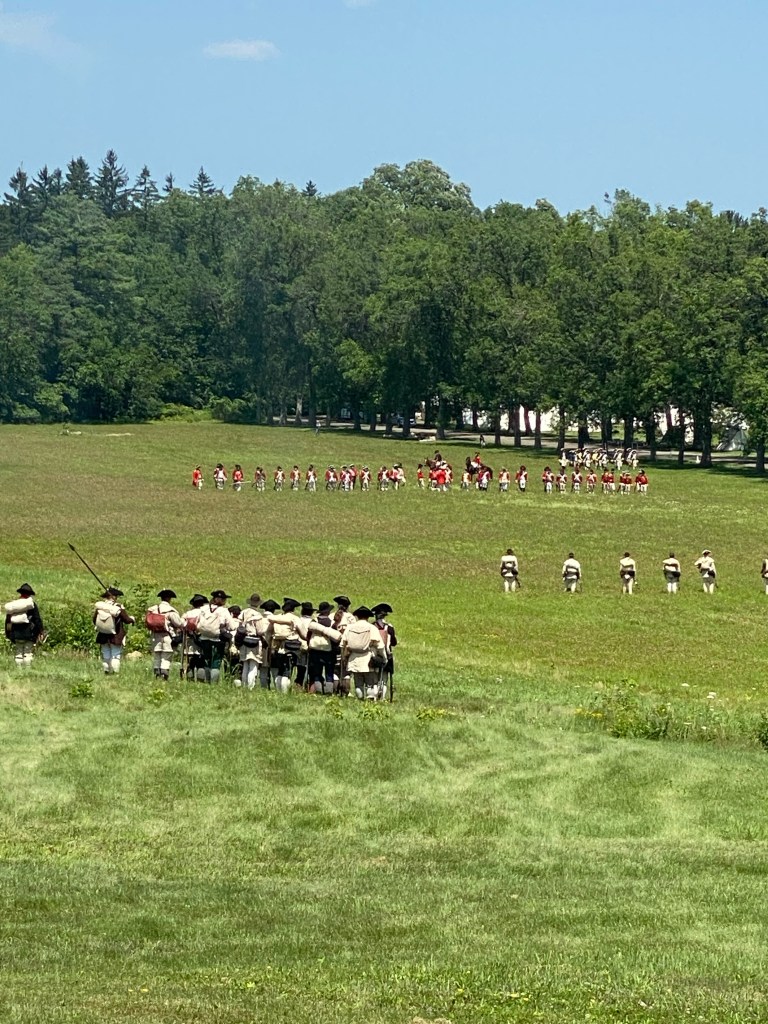
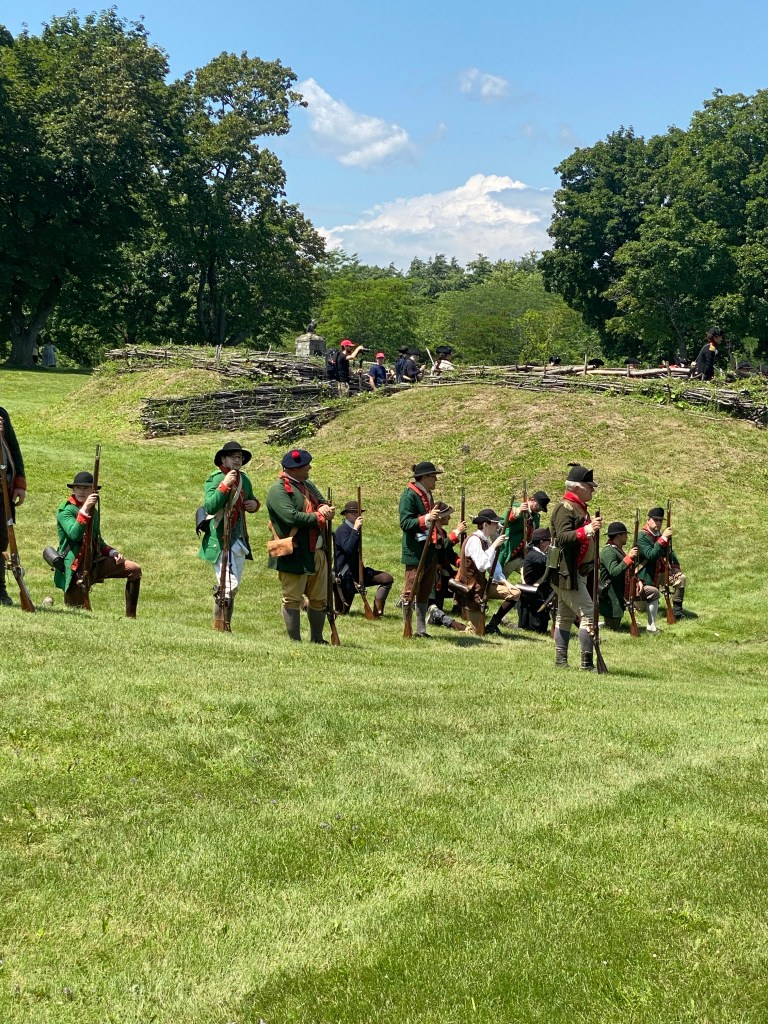
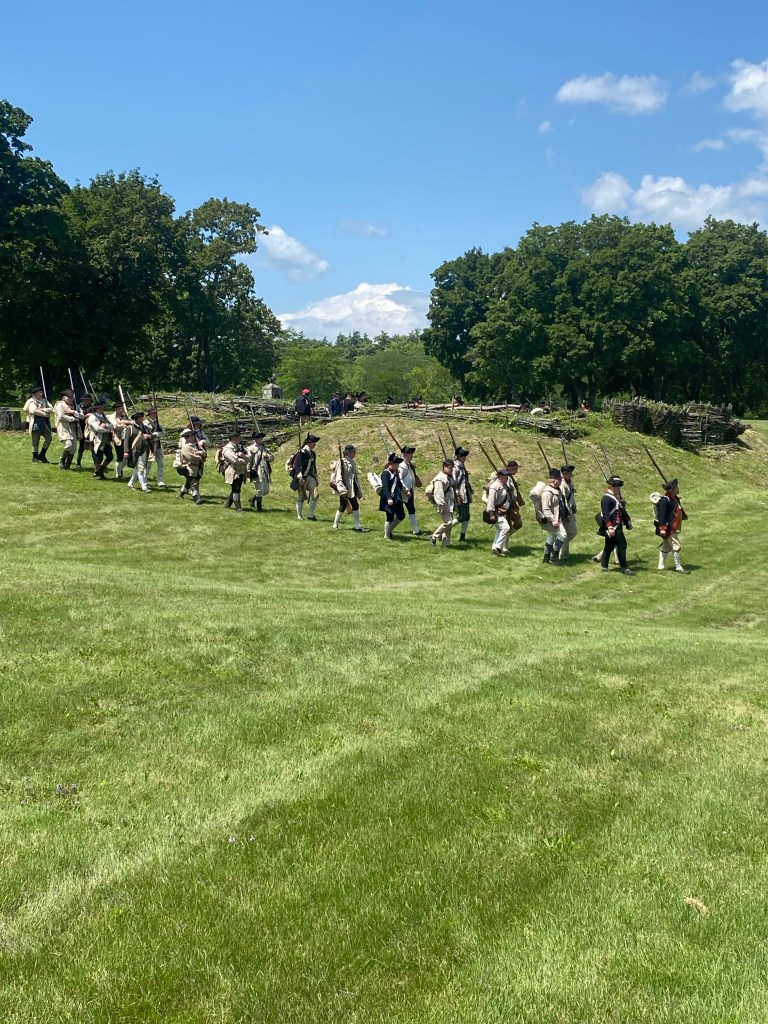
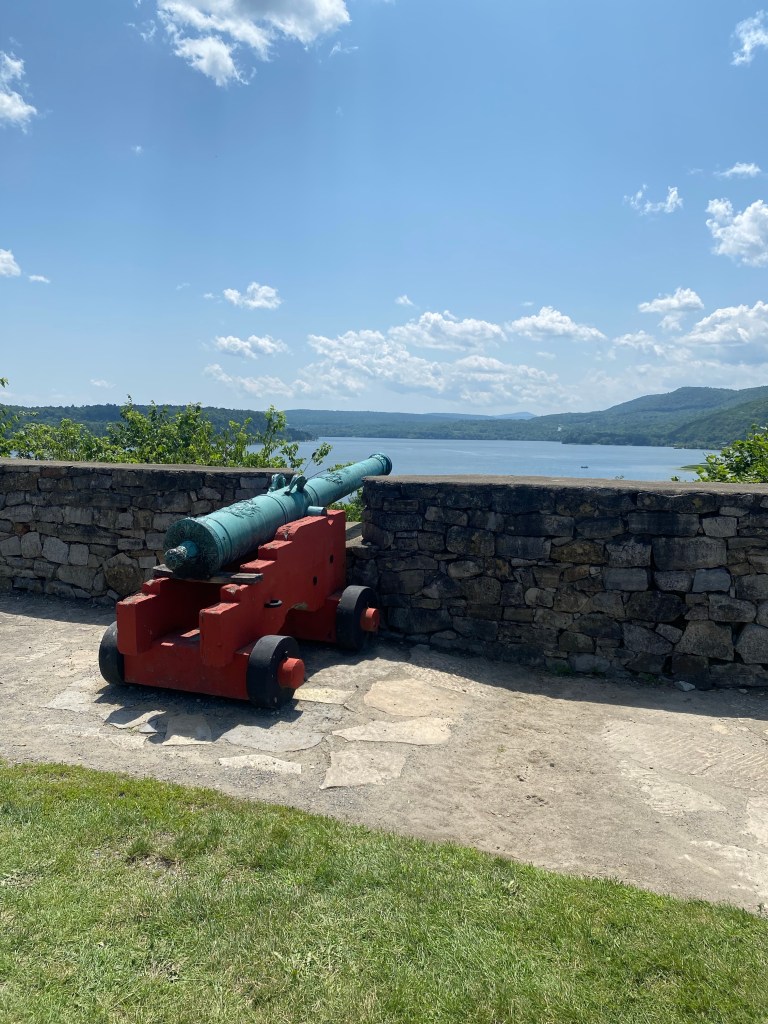
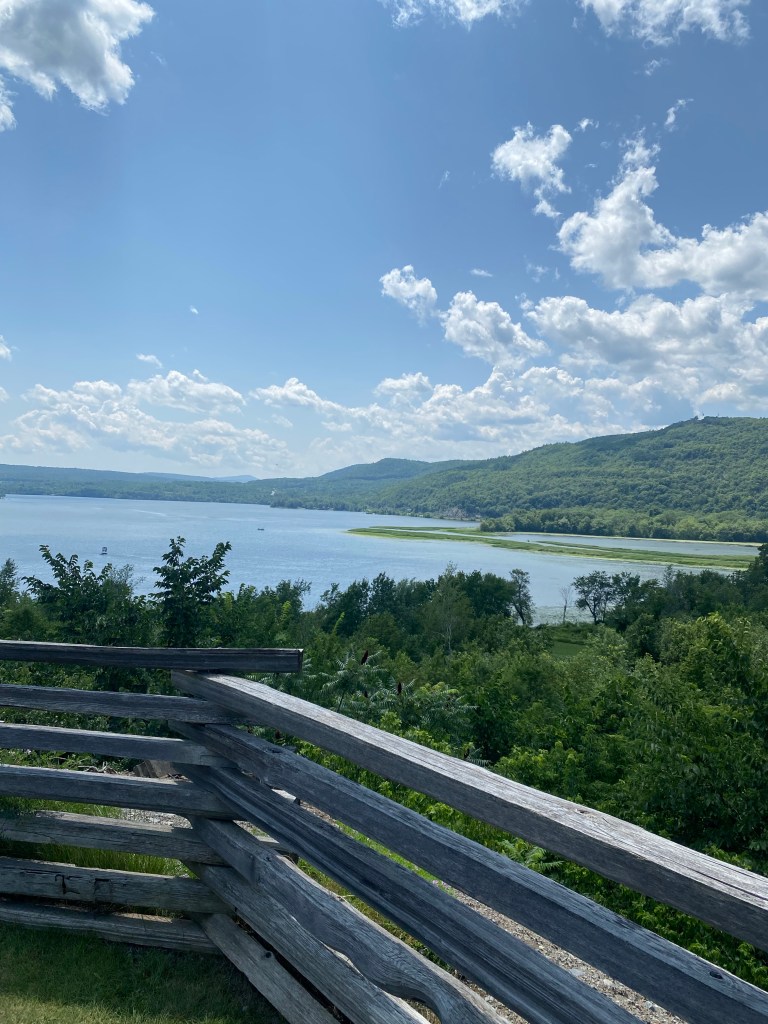
And here are a couple of photos I took from the top of the fort.
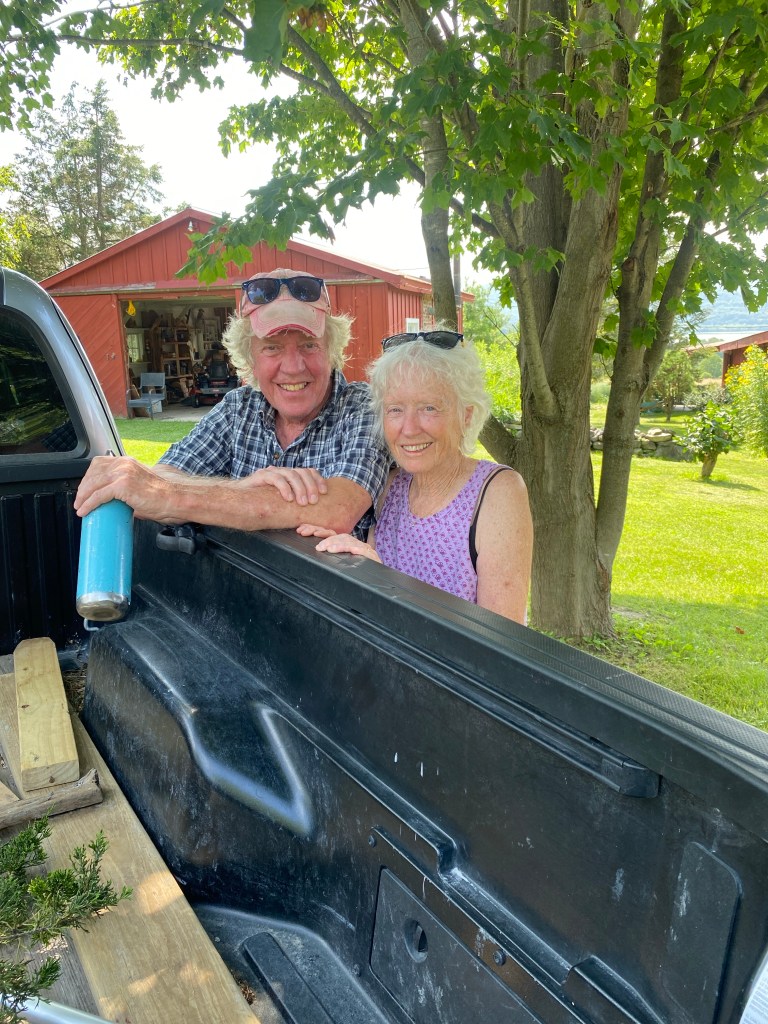
When I took the ferry back to Vermont, I visited Norton’s Gallery, which is about a mile from the ferry landing. I had a delightful visit with acclaimed woodcarver Norton Latourelle and his wife Marlene and a chance to see all kinds of beautiful woodcarvings he has created over the years, mainly involving wildlife. I heard about Norton from our innkeeper Andrew and was really glad to have the opportunity to visit the gallery today. You can get an idea of what my visit to the gallery today was like by viewing a video of Norton talking about his work and his planned path to semi-retirement (he is 73), on the Gallery’s website. I will attempt to paste it here.
| Norton’s Gallery of Woodcarvings nortonsgallery.com |
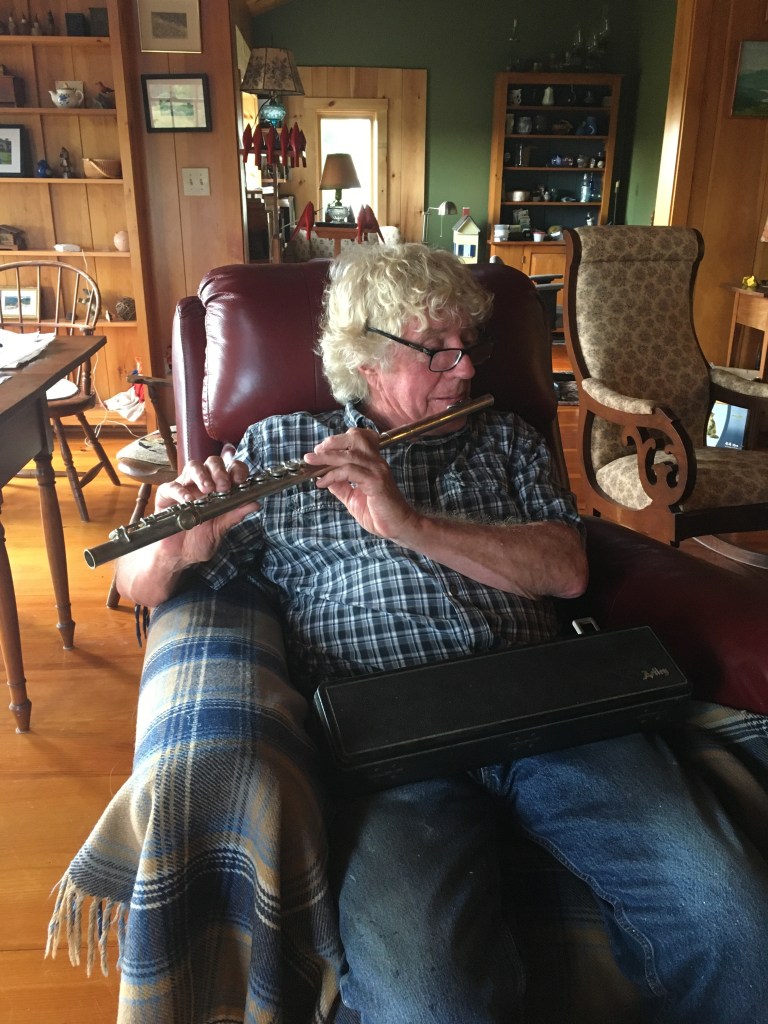
I learned something rather surprising about Norton. A few years back, he had a number of friends who were musicians and decided he could communicate better with them if he understood music. So, he bought a student model flute (an Artley, the same kind of flute Trudi learned to play on when she was eight) and took some lessons from a guy who had his number listed on a billboard at the post office. Norton still has the flute, as you can see in the photo below, but Marlene says he is a bit out of practice right now.
Tomorrow I will be heading back to Ticonderoga, on the bike this time, and from there to points west in the State of New York.


 Joe Green's Bike Adventure
Leave a comment